How to Integrate AI Into Your Creative Practice

By Shauna Friedman
FreelanceMikey offers an irreplaceable human touch for your business and creative endeavors with services like idea brainstorming, coaching, and editing.
How to Integrate AI Into Your Creative Practice
Whether you’re a writer, designer, composer, or other creative, it’s time to sit up and take notice of AI, if you aren’t already. As you likely know, AI is increasingly being incorporated into work processes because it saves so much time and effort, and offers several AI-specific benefits (like big data analysis). This includes creative processes – everything from digital design and content development to music-making and film.
The HBR sums it up nicely: AI won’t replace humans – but humans with AI will replace humans without AI. Incorporating AI into your creative practice can help you offer a better quality of service and reduce your workload.
Below, FreelanceMikey Creative Consulting offers a mini-guide on how to integrate AI into your existing creative endeavors.
Understanding the collaborative role of AI
AI works by analyzing vast data sets, identifying patterns, and then outputting results. AI can’t replace human creativity, imagination, and emotions – but it can inspire, augment, and enhance all three. It can give you a boilerplate to build from, refine, and add to, and it can collaborate with you to make your work easier.
Building a collaborative workflow
To make full use of an AI tool in your creative practice, you can build a collaborative workflow that integrates an AI app or tool. Creatives can find specific AI apps for their niche (such as image generation software if they’re a designer). Or you can use a general-purpose AI tool like ChatGPT.
Here’s a working example of how to integrate an AI app into your workflow:
Initial human manual prompt: First, you provide the AI with a clear set of guidelines, parameters, or examples of works related to your desired output. If you’re designing a webpage, you can input a theme (type of website), some style guidelines, and script interactivity.
Human screening of AI output: The AI will generate some output for you, which you should screen for quality and accuracy. You can ask the AI to make changes to the output or use the output as a new prompt to generate a different (related) output.
Manual human refinement: If you like the output, you can make changes to it manually, based on your unique experience, skills, and talents.
Final human-AI combined result: Once you iterate your work enough, you have the final result, which is a mix of AI and human-generated work. Ideally, you want an output that optimally leverages human and AI strengths (and covers each others’ weaknesses).
The quality of the results you receive will depend on your initial prompt and the AI tool in question. Many AI tools also learn as they go (machine learning), offering better results the more you work with them.
Which creatives can use AI?
Almost all creatives that work with computers or use computer-related apps and tools for their work can use AI. This includes writers, designers, poets, game developers, architects, photographers, music composers, and more. You can check AI trends for your unique niche if you’re curious.
Can you fully automate creative processes?
The answer is yes, although with some caveats. The work produced isn’t always high-quality or original – AI doesn’t have a human identity, emotions, perspectives, and experiences. These things can only be simulated to a degree. It’s not real enough, essentially, and a trained eye can spot the difference.
AI does excel at automating recurring processes, however – if you have to do the same thing over and over again, an AI tool can do it perfectly every time. This has more applications in the business world, which involves a lot of recurring processes like accounting, as opposed to the creative world, which has much more nuance and originality.
You have to add a human quality to creative AI work
Ai can’t generate high-quality creative work by itself – it needs your creative training and input. You need to know what quality work looks like to be able to produce original quality work yourself (with AI assistance). If you’re in the content development niche (marketing, writing, or similar), you can learn about quality content through online resources.
Conclusion
Keep in mind that AI is still a work in progress and has several limitations, especially when it comes to creative work. While it can make your creative practice easier and automate some recurring tasks, it doesn’t always produce quality work, and you’ll still need a trained human eye to get the most out of it.
Image via Unsplash
October 2022!

Photo: Jeremy Thomas
Hey all,
I just wanted to drop by and say thank you to everyone who has been supporting me through my transition to Fiverr.com on a regular basis.
As many of you know, i’ve been spending the past couple of years focusing on music editing and mashups as well as some editing for screenwriting—and of course, spending time with friends and family and enjoying my life.
As of now, I haven’t really decided what to do with this blog, but I do want to keep things current. I think there are some exciting things on the horizon both professionally and personally. Stay tuned.
Thank you again to everybody who has contributed to the business and thereby made my life really enjoyable!
Book a session with me at Fiverr.com/mikeywrites0010.
Seeking Artists and Creative Business Professionals for Interviews

Image by russn_fckr
Hey there, all! Some exciting news!
If you are an artist or creative business professional who would like to be profiled on the FreelanceMikey Blog, please contact me here or at my preferred email at mike.lapenna@gmall.com.
I’m also taking some time to aggregate some content on here to create a more expansive experience. I’m excited about where things can go in the next few months.
I’ll be revamping and re-populating some of the comments sections soon as well. Stay tuned!
Yours,
Michael LaPenna
Find Your Creative Voice and Vision

Do you have an amazing business or business idea that you think needs that extra something?
Do you make art that you want to share with the world in fresh and dynamic ways?
Do you have a wonderful TV show, film, or stage show or production that you'd like to take to new heights?
Do you have music waiting to be heard by the world—music that requires unique messaging, marketing—something more focused to your specific vision?
Do you have a unique design or design concept that you'd like to get out there that you feel needs a new angle, an approach that hasn't been done before?
You might be saying to yourself, "Oh, my God! That's me!" If so, you're exactly who we would like to work with us!
Read moreMy Creative Entrepreneurship Journey and a New Blog Interview Series

The journey continues….
Since embarking on the creative entrepreneurship journey that is FreelanceMikey, I’ve been inspired on a daily basis by starting out doing relatively small jobs with big impacts. Where so many other people live for the weekend, I’ve learned to treat my weekdays ast days to be lived. Now, I spend my days helping ambitious people fulfill their need to get their creative ideas out into the world and I’m thankful for it every day. From creative writing and editing assisting clients with plays, screenplays, memoirs and novels, to the more specific personal one-on-one consulting to help propel personal and professional confidence in my clients, each job and each client gives me a variant on a practiced and consistent sense of purpose in what I do—not just as a creative and entrepreneur but as a air-breathing human being who likes to help people. To this point, my music and audio mixing work has been one of the most rewarding parts of my creative work: making music mixes and mashups for personal use for everything from wedding songs to dance recitals—and even a routine for America’s Got Talent got wrangled in there somewhere. In all cases and get the great privilege to help my clients dream just a bit bigger and express a deep love for what they’re doing. It’s a rich reward I will never ever take for granted in the least.
Read moreCreate With Us!

Business is expanding more quickly than I could’ve imagined, and for the better. The blog posts may continue to be a bit more curated or sporadic in the near term. Of course, if you would like to blog with us, more specifically, with me Mikey, Fill out your information at the “Work with us!” section at the contact page here and I’ll get back to you usually within 48 hours.
Keep creating,
Michael LaPenna
Coming This Fall to FreelanceMikey.com!

I’m back with a quick update about this blog. Hello, ladies, gentlemen, and non-binary patrons and readers!
Life is getting busy as I get ready to ebmark on several new endeavors, and with all this, I’m going to be transforming this blog into an information and interview portal into the hearts and minds of creative professionals from every walk of life from America to Indonesia and any and all points in between. (I’d go into space if I could). My goal is to take you on as many fun journeys into the worlds of creative business art and the art of creative business In ways that are at once focused and fun, comprehensive yet conversational.
Interviews and features will include any of the following:
Entrepreneurs
Educators
Business leaders
Visual artists
Musicians
Actors
Comedians
Novelists
Screenwriters
Playwrights
Graphic designers
Home stagers
Multimedia artists
Psychologists
Sociologists
Biographers/historians
Join me this fall as we take a journey into all this and more!
Don’t Call It a Comeback: The FreelanceMikey Blog Gears Up for That ‘New New’

A formal occasion (not my wedding)
Hello, ladies, gentlemen, and nonbinary digital natives! After a long hiatus, I’m back to update you on all the goings-on of late with FreelanceMikey Creative Consultation and what has been the cause of this long but much-needed sabbatical. The FreelanceMikey blog has been dormant lately due to shifting dynamics in the business and in my own life of late. I’ve been focusing on my editing, music mixing, and keeping up my physical health working with a physical therapist (due to my cerebral palsy).
In this vein, I want to take time to appreciate your visit to the website and the FreelanceMikey brand and blog, and I absolutely thank you for your patience. (I’m also planning my wedding these days, so my life rolls on hard—both in and out of my wheelchair ♿️).
New projects, new locations, new interviews, and new horizons are in motion for all of the creative campaigns that my friends, colleagues, and I aim to bring to the fore in 2019.
Currently, there are a few projects very key projects underway including general project consulting and specialized projects. Formats and pricing and listed in the home menu. Go to our services page for more.
Most absolutely, I want you to know that going forward as always, I definitely want to further my mission in helping you be yourself fully in whatever medium you choose to explore.
May you move boldly and follow your bliss,
Michael LaPenna
#ThursdayThoughts: Don't Give Up on Your Dreams; Adapt

Follow @commandinglife. Special thanks to Alex for the inspiration.
My friend posted this on her Instagram feed today, and I got really inspired to say something to you all. As many of you might know by now, I’m going through some life transitions such as my wedding and moving into a new home in a new place. Transitions like this happen to us all whether literal or more metaphorical. You may live in uncertain times. There may be judgment or prejudice, disagreement or turmoil. Regardless, please don’t give up.
What I’ve can gleaned from my own life’s transitions is to know that the tides of your creativity will never stagnate or be still so long as you keep a dream in your heart and a fire in your belly for that mysterious, ineffable thing that makes you wide eyed and hopeful just by thinking about it. I believe that mystery is your spark that will light your passions. Follow that bliss like a breeze wherever it will take you. There is magic that awaits.
Stay hopeful,
Mikey
Updates on Business and Life Transitions
Hi All,
I just wanted to touch base with anybody who might be coming by the blog. Life transitions are moving things around a bit and I’ve also been focusing on my health as of late. I still would like to get more projects profiled on here at FreelanceMikey, so feel free to hit me back. I’m excited about some new projects in the pipeline along with planning my wedding for next year! More good to come! Be good!
Updates, updates!

Hey All,
Just a quick update from yours truly from the FreelanceMikey headquarters in beautiful suburban New York. I’ve had to take some time to handle my health in the past two weeks, but now it’s time to get back on the horse! I’m currently in the process of booking interview segments for the blog here on the FreelanceMikey website.
If you're a creative person who kind of views life from a 45° angle (as George Carlin used to say) or just looking to showcase your work in a way that is accessible, talkative, intuitive, and fun, contact me here or on Twitter and Instagram @FreelanceMikey! i’d love to talk shop with you about your contributing influences, meandering pathways, and your highest moments of creative clarity in life, art, business, personal growth, and more. I look forward to chatting with you soon!
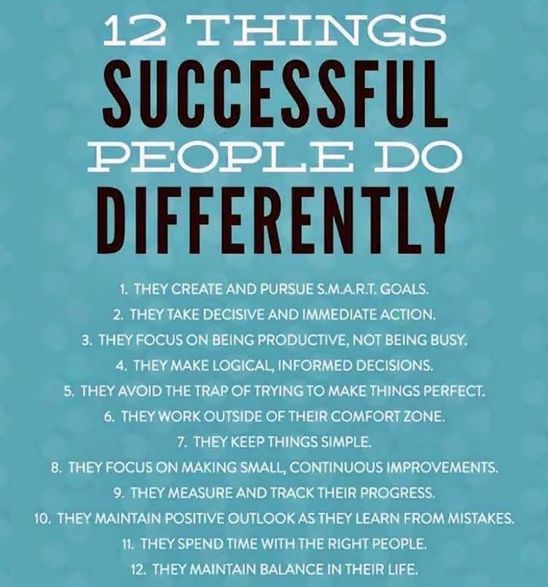
12 Things Successful People Do Differently
There you are sitting at your desk, mulling over your bills, tired from a day at work filled with aching shoulders and employees who seem much more concerned with their time off than that end-of-day deadline for that latest campaign for that Bakery outside Boston.
You want more! You want greater heights to explore who you are as a business, as a boss, and as a creative being!
So how can you do all this without killing your time or your energy and maximizing effectiveness in all areas?
Here are 12 things successful people do differently to achieve maximum results in their businesses and lives without going over their limits.
New Goodness Coming Up!

Well, it’s been wild one—between unique screenplay projects and personal delays due to a death in the family—but have no fear, I’ll be back next week with greatness, (or at least a really fun, passable facsimile). Be good and do some good!
P.S. I might even do a post about visiting the David Bowie exhibit in New York City, or I could talk about my alma mater SUNY New Paltz’s production of Avenue Q that I’m seeing over the weekend. We shall see. :)
#MondayMotivation: Each Day Brings a New Opportunity To Create Something

Each day brings a new opportunity to create something...
I just want to drop you a line and remind you about your creative opportunities. Every day brings a new opportunity to create something: a moment, a dance, a friendship, a blog post, a song, a project, a job, a work of art, a work of craft. You can do ANYTHING THAT MOMENT GIVES YOU! Just play around, and see what you can come up with, and follow your bliss!
Expect to Succeed—Even If You Don't

Expect to succeed—even if you don't.
So often as a creative consultant, I'm asked what my advice is for basic success in anything and everything from creative project planning for your boss' all-inclusive, multi-cultural holiday party featuring a traditional Nigerian Christmas, to writing a confident letter to HR so that you can create your own job title as Director of Photography for the new website for that antique shop in Topeka. My answer is almost always the same: "See the success as if it's already there, and then, take that feeling, and let it fuel all the excitement and ideas it can!" Some ideas will be great and some horrendous, but the whole point is in the doing. In coaching and in cognitive behavioral therapy, this is often called "acting as if." It's a practice that primes the thinker to feel what it's like to be where he or she wants to be. More to this point, the science has shown that, very often, our emotions and biological systems can't tell much of a difference between the feelings of our imaginations and the arrival and actualizations of our goals. (Read a full text on how acting, and imagination create experience, empathy, and more here.) The more you do this, the more practiced and proficient you'll be come. Try it now. I'd like you to picture yourself in your ideal job. You're in a chair you like. You're talking with people you enjoy working with. Janet just had a great idea for that new project way before the deadline! You smile and feel excitement in your belly!
Now, look at the above scenario and notice how you feel when you're thinking about whatever relatable scenario you have for your own life: planning a trip with your partner, starting that new business you've been putting off. Take that exact thing, that exact wonderful feeling, and feel it as if it's right there in front of you! Notice how you can't stop smiling! Notice how many multitudes of ideas pop into your head! Notice how "in the zone" you feel or how going "with the flow" becomes your natural state. (Read more on flow psychology here.) You see yourself succeeding, getting that promotion you've known is coming, and that relationship you're picturing seems so good! You sit better. You stand better. You speak clearly. You're willing to take chances. Go right ahead! Try that new cardio salsa class; take that trip to Indonesia; write that book based on that epiphany you had in tenth grade. When you act from that joy and that right feeling, you don't rush from a place of fear and make rash leaps into a void of no return; rather, you act with a level head and being willing to fail a bunch and figure it out as you go. In this much, practice doesn't make perfect as much as it just makes learning and grows a belief that your goal is possible.
All successes start with an idea of what's possible. A thousand years ago, could anyone have predicted the iPhone? Think even farther back to the wonders of the ancient world. Could the rulers of the Egyptian dynasties—in all their belief in the bedazzling power of the Pyramids of Giza and the Egyptian people's unwavering confidence in the most advanced knowledge entrusted to the great Library of Alexandria—have conceived of some of the poorest people on our planet now having access to the ubiquitous LIBRARY OF EVERYTHING that we call Google? Nope. All these miracles or creativity first had to be imagined and believed possible by their inventors. It's the faith in what could be possible, (what psychologists refer to as growth mindset. Read here.) that creates ideas, technology, etc. It's this growth mindset that I really believe fosters a willingness to experiment and make mistakes that lead to eventual success. I can attest to this in my own work. Some of the best music mixes I've made have been by accident, and I sometimes write scripts and stories after a mishap like falling down in my kitchen while saving a chocolate cake from splattering onto my kitchen floor. This kind of "pro-mishappenstance" mentality is even more useful and even fun when one considers, that, to paraphrase Eat, Pray, Love author Elizabeth Gilbert in her book Big Magic: Creative Living Beyond Fear, art and the arts—on even the broadest of spectrums—are not, nor have they ever been fatal to a well-lived life. There are no botched surgeries caused by a smudged painting, no loss of life from a flubbed lyric at a Kanye West concert, and neither your health nor your finances will likely ever be compromised by your hatred for Salvador Dali's Mae West lips couch, (despite your mother's thinking to the contrary). Your creativity can afford mistakes.
Last, but never least, I want to leave you with the notion that you should find joy in the steps: the journey, the air you breathe, the path you travel. Life doesn't wait for you to be happy when it's over. Choose to be happy now! Choose to expect to be happy with all that life gives you. You will fail, and you will succeed. You may have to change plans and mix it up, but staying expectant of good things will make you enjoy and see all the good that is, and seeing this positive growth will most likely encourage exploration in you. You'll find yourself getting more done and being happier: happily failing and succeeding, and dreaming maybe a little bigger and a little more boldly each time. So, take chances, fall down, get up, make mistakes, innovate, invent, and reinvent—and expect to succeed even when you don't—and in the words of the late Joseph Campbell, follow your bliss!
How to be happy (in business and in life)
How to be happy has always plagued us, but the search for how to be happy ultimately comes down to a being and not a searching. How to be happy in business or in everyday life is a discision you and I must make. The only way to be happy is to be being it as much as possible. Be the thing that makes you happy by doing the thing that makes you happy! The following excerpt is from a several-decades-old lecture from the late Alan Watts. It's called "Why you're not Happy."


Quisque iaculis facilisis lacinia. Mauris euismod pellentesque tellus sit amet mollis.